|
"The much-used analogy of King Canute vainly holding back the tide is now echoed loud and clear in European political circles. The belief is that laws, come what may, are made to be obeyed. Given a set time frame for full compliance, that’s easy with some, difficult with others and for some next to impossible. Given the real world we live in today, allied to a fast-shrinking diesel car market, there is one mandatory obligation in Europe’s large automotive market that for some has all the hallmarks of Mission Impossible.
For most carmakers, the obligatory need to comply with the EU’s 95g/km fleet average by 2021 looks extremely difficult.
Yes, it is not unreasonable to expect that target to be met by all the participating carmakers.
Surely, all that’s needed to cross that EU hurdle is to conjure up a significant rise in the sales share of mainly BEVs and PHEVs.
Clearly not rocket science.
Dream on.
Evidently, Norway has done it, why can’t EU Europe?
The mountain of cash needed and legislators’ willingness to subsidise car buyers sufficiently to switch en-masse to BEVs and PHEVs simply doesn’t exist.
So what other options are there?
Toyota, the way things evolved of late on the hybrid incentive side of things, looks like making it under its own steam.
One quick hurrah for its excellent solo effort.
Hyundai-Kia, judged from their recent efforts on the European product front also jumped on Toyota’s hybrid bandwagon.
So how about the rest of the industry?
It’s time for a reality check.
Logically Europe’s carmakers had all their money on the well-understood CO2 advantages of latest diesels.
Prior to the Volkswagen sparked dieselgate scandal, there was simply no need to also follow Toyota into the now cost-effective mass manufacture of petrol-electric hybrids.
However, dieselgate, almost exactly three years ago, has effectively left Europe’s carmakers exposed like the emperor's new clothes.
Diesel car demand in Europe has plunged far faster than even pessimists could have expected.
The idea of stopping it or slowing it notably, can’t be ruled out, but now looks increasingly unlikely.
Yet, never say never.
Like Toyota with its petrol-electric hybrids, in the real world Europeans should stick to what they know best.
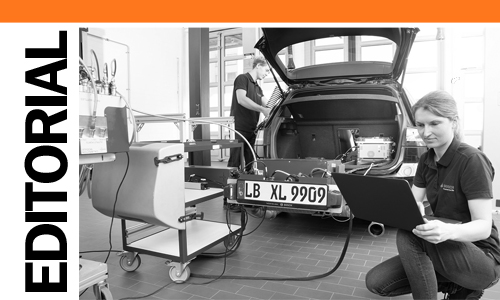
Yes, highly controversial perhaps, but Bosch said in late April its new exhaust cleaning system slashed deadly nitrogen oxide emissions from diesel engines far below legal limits.
In so doing Bosch has created the first genuine ‘Clean Diesels’ in automotive history.
Given the problems at hand on the CO2 emission side, it is foolish not to follow this plausible route, at least in Europe.
Getting back onto the well understood diesel path, with a little help from so-called
super credits for their BEVs and some of their PHEVs, Europe’s carmakers could probably comply with the EU’s ultra-tough 95g/km
CO2 level in around two years from now.
Meanwhile, the clock keeps ticking.
While in Europe the medium to long automotive future is electric, in the short term genuine ‘Clean’ diesels now offer the most cost and time-effective route to meet the EU’s tough
CO2 fleet average emission levels on time.
Evidently this option is only a plausible option if all governments can be made to see it the same way.
But more crucial still, after the most accomplished and deserved anti-diesel flak, both the media and the public now needs to be re-educated.
Give clean diesels a chance.
|
